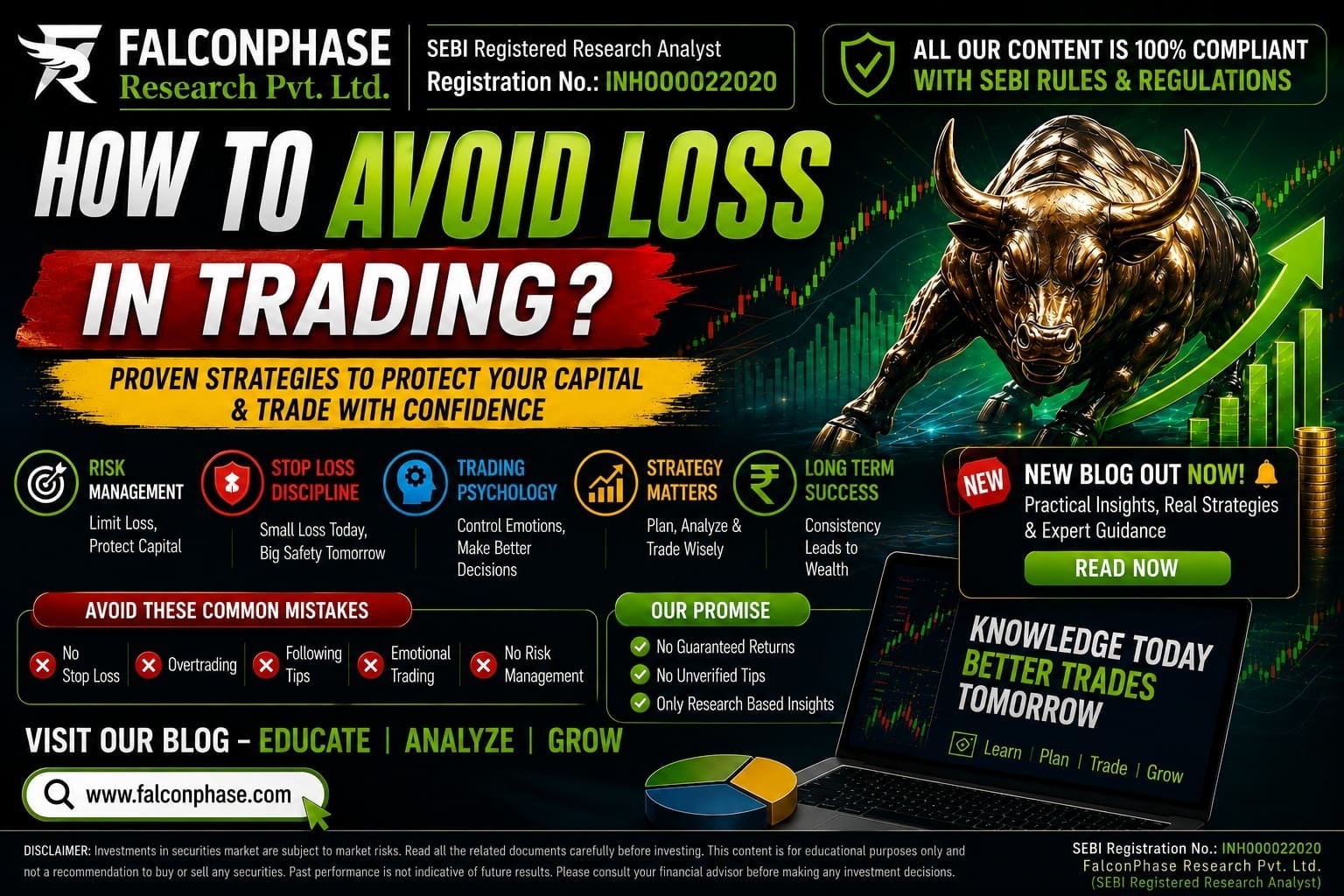
How to Avoid Loss in Trading
📌 Introduction
Trading in the stock market involves risk, and losses are a natural part of market participation. However, unmanaged losses often result from lack of planning and discipline rather than market behavior itself.
As per guidelines of Securities and Exchange Board of India, investors and traders should make informed decisions and understand all associated risks before participating in the securities market.
⚠️ Why Do Traders Face Losses?
Most traders experience losses due to:
- Lack of knowledge
- Emotional decision-making
- Overtrading
- Ignoring risk management
Understanding these factors is the first step toward reducing losses.
✅ 1. Always Use Stop Loss
A stop loss helps limit potential losses by exiting a trade at a predefined level.
Benefits:
- Prevents large losses
- Reduces emotional decisions
- Protects trading capital
✅ 2. Follow Proper Risk Management
Never risk a large portion of your capital in a single trade.
Good practices:
- Risk only a small percentage per trade
- Maintain risk-reward ratio
- Avoid full capital deployment
✅ 3. Avoid Overtrading
Trading frequently without proper analysis increases chances of loss.
👉 Focus on quality trades, not quantity.
✅ 4. Do Not Trade Based on Tips
Avoid relying on:
- Social media tips
- Unverified sources
- Random recommendations
Always use proper analysis before taking any position.
✅ 5. Control Emotions in Trading
Emotions like fear and greed can lead to poor decisions.
Common mistakes:
- Revenge trading
- Holding losses too long
- Exiting profits early
✅ 6. Start with Paper Trading
Beginners should practice using paper trading before investing real money.
This helps in:
- Understanding strategies
- Reducing risk
- Building confidence
✅ 7. Keep Realistic Expectations
Trading should not be considered a fixed income source.
Market returns depend on multiple factors, and no strategy can assure consistent profits.
📊 FAQ Section
❓ Can I avoid loss completely in trading?
No, losses cannot be completely avoided, but they can be managed with proper risk control.
❓ What is the safest way to trade?
Using stop loss, proper position sizing, and disciplined strategy reduces risk.
❓ What should I do before starting trading?
You should:
- Understand market basics
- Learn risk management
- Start with paper trading
- Be aware of regulatory guidelines
❓ Why do most beginners lose money?
Common reasons include:
- Lack of knowledge
- Emotional trading
- Overtrading
- Ignoring risk management
🏁 Conclusion
Avoiding losses entirely in trading is not practical, as market movements are influenced by multiple unpredictable factors. However, controlling and minimizing losses is achievable through a disciplined approach, proper risk management, and continuous learning.
Successful participation in the stock market is not about making profits in every trade, but about protecting capital, maintaining consistency, and following a structured strategy over time. Traders who focus on long-term sustainability rather than short-term gains are better positioned to navigate market uncertainties.
At FalconPhase Research Pvt. Ltd., we emphasize the importance of informed decision-making, realistic expectations, and adherence to regulatory guidelines set by Securities and Exchange Board of India. A well-informed and cautious approach helps in reducing unnecessary risks and supports better financial discipline.
Ultimately, trading should be approached as a skill that develops with experience, patience, and continuous evaluation, rather than a source of assured or fixed income. By following structured practices and maintaining discipline, individuals can work towards more stable and responsible participation in the financial markets
⚠️ Disclaimer
The information provided is solely for educational and informational purposes and should not be construed as investment advice, recommendation, or solicitation to buy or sell any securities or financial instruments.
- FalconPhase Research Pvt. Ltd. does not make any representations or warranties regarding the accuracy, completeness, or reliability of the information. Content is based on general market understanding and publicly available sources, subject to change without notice.
- Investments and trading in the securities market are subject to market risks, including price volatility, liquidity risk, and economic factors. Past performance is not indicative of future results.
- Readers and investors are advised to:
- Conduct independent research and analysis
- Consider their financial situation, risk tolerance, and objectives
- Consult a qualified financial advisor or registered intermediary before making decisions
- As per regulations of Securities and Exchange Board of India, no guarantees or assured returns are permitted in the securities market. Any action taken based on this content is at the reader’s own risk.
- FalconPhase Research Pvt. Ltd., its directors, employees, or associates shall not be liable for any direct or indirect loss arising from the use of this information.
- The company does not engage in activities involving assured returns, profit-sharing, or handling of client trading accounts, except as permitted under applicable regulations.
- By accessing this content, the reader agrees that they are solely responsible for their investment decisions and outcomes.