📈 Stock Selection Process: A Simple Guide for Investors
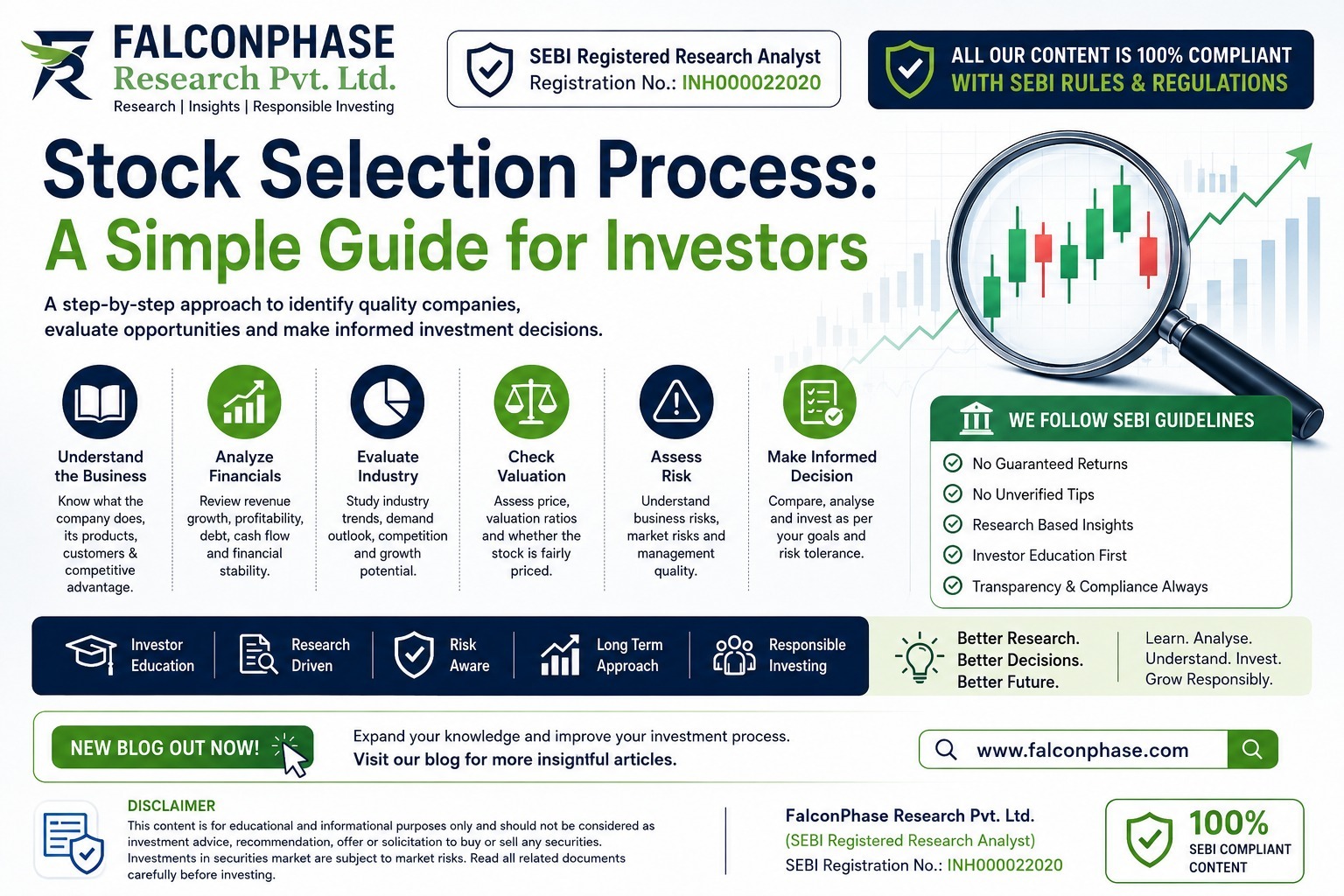
📌 Introduction
- 📖 Selecting stocks is one of the most important steps in investing.
- 💡 Many people enter the stock market based on tips, emotions, or social media discussions.
- 📊 However, a structured stock selection process can help investors make more informed decisions.
- 🎯 This article explains a simple stock selection process in easy language for beginners and experienced investors.
- ⚠️ Note: This article is for educational and informational purposes only and should not be treated as investment advice or a recommendation to buy or sell securities.
📈 What is Stock Selection?
- 🔍 Stock selection means identifying companies for further investment research based on predefined criteria rather than random choices.
- 🎯 The objective is not to predict guaranteed returns but to evaluate businesses systematically.
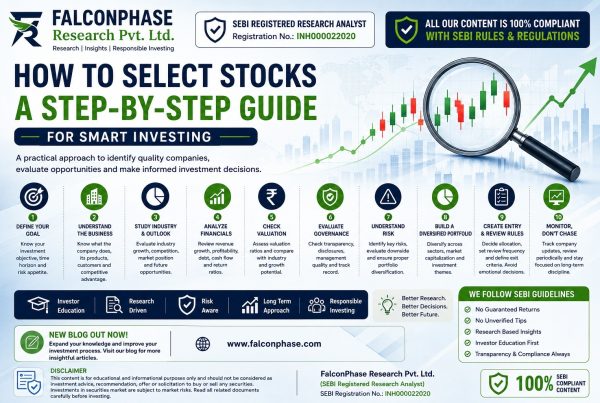
📝 Step 1: Define Your Investment Objective
Before selecting any stock, ask:
- ⏳ Are you investing for short term or long term?
- ⚖️ What level of risk are you comfortable with?
- 📅 What is your investment horizon?
- 🎯 Are you looking for growth, stability, or diversification?
- ✅ A clear objective helps narrow the research process.
🏢 Step 2: Understand the Company’s Business
- 🚫 Do not invest only because a stock price is moving.
Understand:
- 🛍️ What products or services the company offers
- 🏭 Industry position
- 💰 Revenue sources
- 🏆 Competitive advantages
- ♻️ Business sustainability
Simple question:
- ❓ “If I cannot explain what the company does, I may need more research.”
📊 Step 3: Review Financial Indicators
💹 Revenue Growth
- 📈 Is the business growing over time?
💵 Profitability
- 💹 Is the company generating profits consistently?
🏦 Debt Position
- ⚖️ Is borrowing manageable?
💳 Cash Flow
- 💸 Does the company generate operating cash?
- 📌 Numbers should be viewed together and not individually.
👔 Step 4: Evaluate Management and Governance
- 👍 Good businesses also require good governance.
Review publicly available information such as:
- 📢 Corporate announcements
- 📄 Annual reports
- 📑 Governance disclosures
- 🎙️ Leadership communication
- 🔍 Transparency and consistency are important.
🌍 Step 5: Study Industry and Market Conditions
- 📉 Even strong companies are affected by broader market conditions.
Consider:
- 📈 Industry growth
- 🌐 Economic environment
- 🏢 Competition
- ⚖️ Regulatory developments
- 🚫 Avoid making decisions based only on short-term market movement.
💲 Step 6: Assess Valuation
- 💡 A good company may not always be a good investment at every price.
Questions to consider:
- 💰 Is valuation reasonable?
- 📈 Has the price increased rapidly without business improvement?
- ⚖️ Does valuation align with fundamentals?
🛡️ Step 7: Risk Assessment
Before any decision:
- 🌐 Diversify investments
- 🚫 Avoid concentration
- 🎯 Set expectations realistically
- 📋 Maintain investment discipline
- ⚠️ Risk management is as important as stock selection.
🗂️ Step 8: Document Your Investment Reason
Maintain a simple checklist:
- ✅ Why this company?
- 📅 Expected investment horizon
- ⚠️ Key risks
- 🚪 Exit or review conditions
- 📝 Documented decisions can improve consistency.
📚 Compliance and Investor Awareness
Responsible investment communication should:
- 🚫 Avoid promises of guaranteed returns
- ⚠️ Avoid misleading performance claims
- ⚖️ Present balanced risk disclosures
- 🔍 Encourage independent evaluation
- 📖 Distinguish educational content from investment recommendations
- 📌 Investment decisions should be based on individual financial circumstances and applicable regulations.
🎯 Conclusion
- 🏆 Successful stock selection is not about finding shortcuts.
- 📚 It is a process of understanding businesses, reviewing information carefully, assessing risks, and making disciplined decisions.
- ⏳ Investing with research and patience may support better decision-making over time.
⚠️ Disclaimer
- 📢 This article is published by FalconPhase Research Pvt. Ltd. for educational and informational purposes only.
- 📖 The content provided in this blog is intended to improve general awareness and understanding of stock selection concepts and should not be construed as investment advice, investment recommendation, solicitation, assurance of returns, portfolio management, or an offer to buy or sell any securities.
- 🔍 Readers are encouraged to conduct their own research and evaluate their financial objectives, risk profile, and investment suitability before making any investment decisions.
- 📉 Stock market investments are subject to market risks. Past performance, illustrations, examples, or market discussions (if any) do not guarantee future results.
- 📚 Any views, examples, opinions, or educational explanations contained in this article are intended solely for investor education and should not be interpreted as a promise, representation, or guarantee of performance.
- 📜 Readers should refer to applicable laws, regulations, disclosures, and official documents before acting on any financial information.
- © FalconPhase Research Pvt. Ltd. All rights reserved.