How to Analyse Stocks for Long-Term Returns

A Practical and Regulatory Perspective
Prepared by Internal Research & Compliance Team
FalconPhase Research Private Limited .
Introduction
Over many years of observing Indian capital markets, one truth remains constant:
Long-term wealth is created through discipline, patience, and understanding of business fundamentals — not through tips or shortcuts.
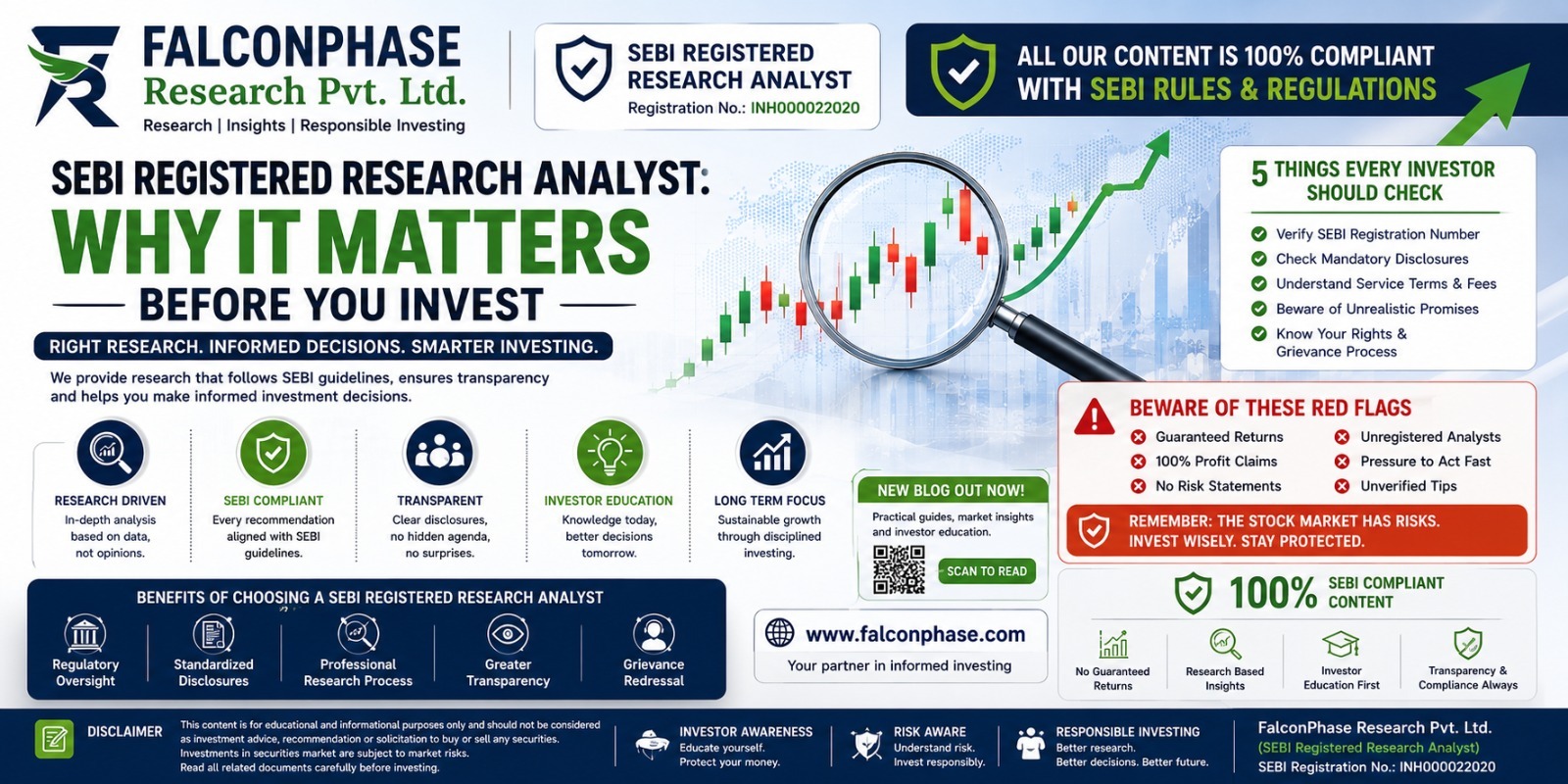
The Indian securities market operates under the supervision of the
Securities and Exchange Board of India (SEBI), which ensures transparency, proper disclosures, and investor protection.
However, regulation alone cannot guarantee profits. Investors must learn how to analyse stocks carefully and responsibly.
This article explains, in simple language, how to evaluate stocks for long-term investment.
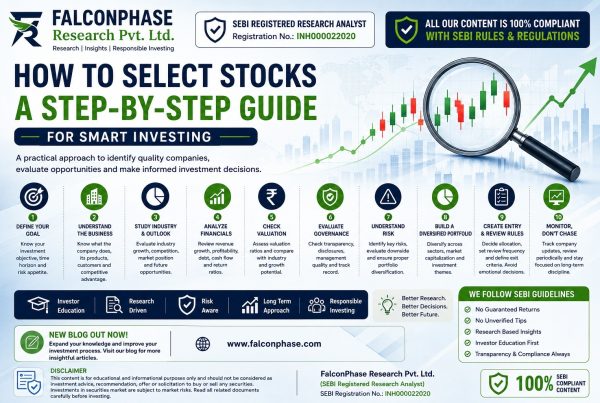
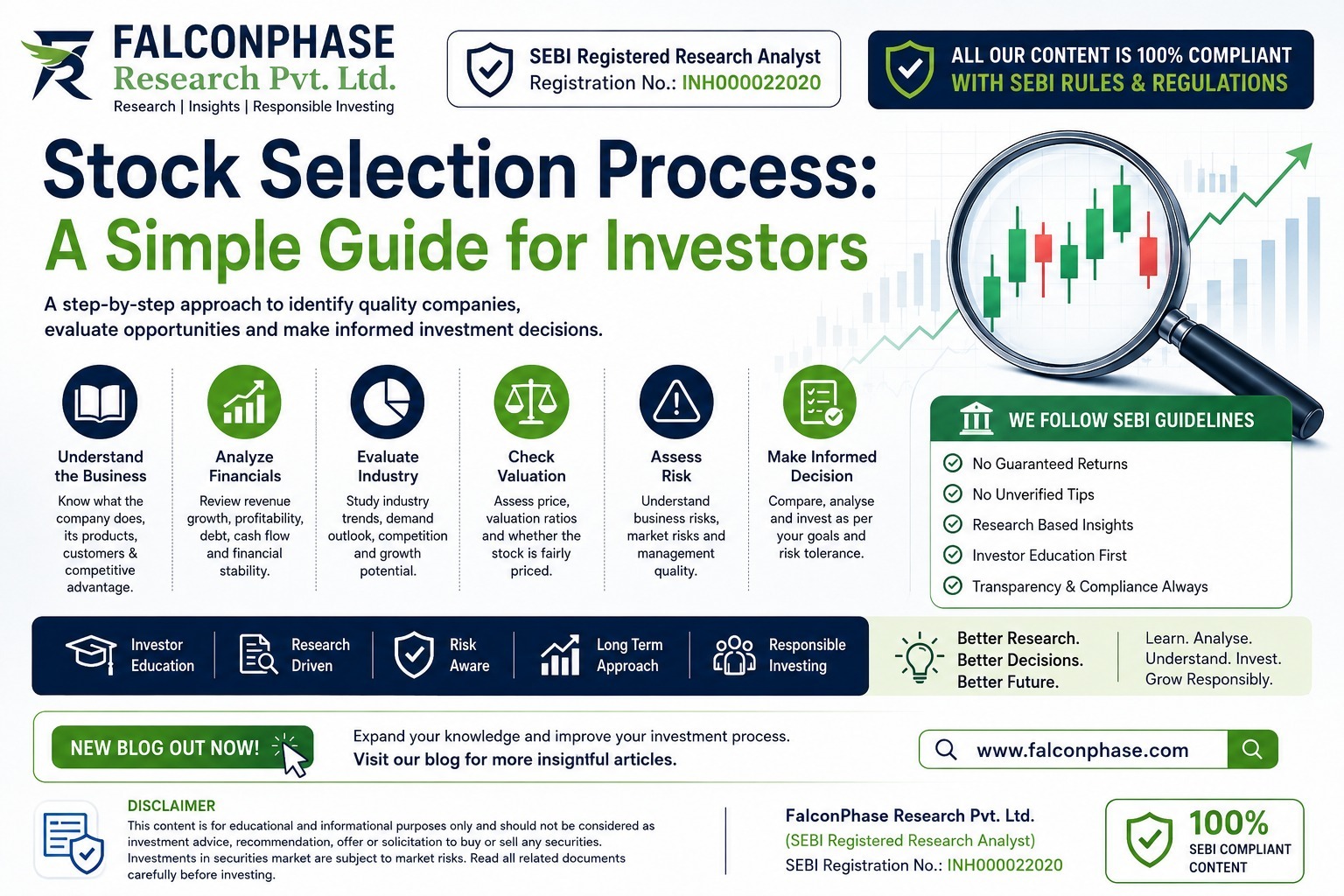
1. Start with the Business, Not the Share Price
Before looking at the stock price, understand the company.
Ask yourself:
- What does the company actually do?
- Is the business easy to understand?
- Will this product or service still be needed after 10 years?
- Does the company have strong competitors?
A strong business with steady demand usually performs better in the long run.
2. Check If the Company Is Properly Listed
Invest only in companies listed on recognised exchanges like:
- BSE Limited
- National Stock Exchange of India
Listed companies must follow strict disclosure rules under SEBI and the Companies Act. This gives investors access to:
- Quarterly results
- Annual reports
- Auditor reports
- Corporate governance disclosures
Transparency is very important for long-term investing.
3. Study the Financial Numbers
You do not need to be a Chartered Accountant, but you must understand basic numbers.
Revenue Growth
Is the company’s sales increasing consistently every year?
Profit Growth
Are profits stable or growing?
Frequent losses are a warning sign.
Return on Equity (ROE)
ROE above 15% for many years is generally considered healthy.
Debt Level
Too much debt can be risky.
Check if the company can comfortably pay interest.
If numbers look too good suddenly, read carefully. Sometimes fast growth may not be sustainable.
4. Observe Management and Governance
Good management builds long-term wealth.
Check:
- Is promoter shareholding stable?
- Is promoter pledge low?
- Has the auditor resigned recently?
- Are there frequent management changes?
SEBI regulations require companies to disclose insider trading and related party transactions. Investors should read these carefully.
Strong governance usually means lower long-term risk
5. Do Not Ignore Valuation
Even a good company can be expensive.
Before investing:
- Compare P/E ratio with industry average.
- Check whether growth justifies the valuation.
- Avoid buying only because the price is rising.
Remember:
No SEBI-registered entity is allowed to promise guaranteed returns in equity markets.
If someone guarantees profit, it is a regulatory violation.
6. Observe Management and Governance
Do not invest all money in one stock or one sector.
Spread your investment across:
- Different industries
- Different market caps
- Different risk levels
Diversification reduces overall risk.
7. Follow Compliance and Safety Practices
Always:
- Invest through SEBI-registered intermediaries
- Complete proper KYC
- Use official trading platforms
Never:
- Share OTP
- Share Demat login credentials
- Transfer money to personal accounts for trading
Investor protection begins with responsible behaviour.
8. Think Long Term — Avoid Emotional Decisions
Stock markets move in cycles.
Prices may fall due to:
- Economic slowdown
- Global issues
- Temporary company problems
Do not panic in short-term volatility if business fundamentals remain strong.
Long-term investing requires patience.
9. Review Periodically — Quarterly for Performance, Annually for Strategy — Not Daily
Avoid monitoring stock prices on a daily basis, as short-term movements often reflect sentiment rather than intrinsic value.
Instead:
- Review quarterly financial results to monitor operational performance, revenue trends, margins, and debt levels.
- Review the annual report to evaluate long-term strategy, management effectiveness, governance standards, and sustainability of growth Review every year:
- Sales growth
- Profit trend
- Debt levels
- Industry position
- Governance standards
If business quality remains strong, temporary price fluctuations should not disturb long-term vision.
10. Role of Research-Oriented Entities
Research-focused entities such as FalconPhase Research Private Limited work towards structured analysis, risk awareness, and regulatory compliance.
The foundation of ethical research must include:
- No guarantee of returns
- No profit-sharing arrangements
- No handling of client funds without proper registration
- Full disclosure and transparency
Compliance is not optional — it is essential for market integrity.
Conclusion
Long-term stock analysis is not complicated, but it requires:
- Understanding of business
- Basic financial knowledge
- Governance awareness
- Valuation discipline
- Emotional control
Under the regulatory supervision of SEBI, Indian markets offer strong opportunities. However, success depends on informed and disciplined investing.
In the stock market:
Patience and discipline create wealth.
Shortcuts usually create losses.
Disclaimer
This article is published for educational and informational purposes only and should not be construed as investment advice, recommendation, or solicitation to buy or sell any securities.
Investments in the securities market are subject to market risks, including possible loss of principal. Past performance is not indicative of future results. Readers are advised to conduct their own research and consult a SEBI-registered intermediary before making any investment decisions.
FalconPhase Research Private Limited does not provide any assured or guaranteed returns, and this content should not be treated as personalized investment advice